
Snuffle and Swim
Fire Eel
Fire Eel
Out of stock
Couldn't load pickup availability

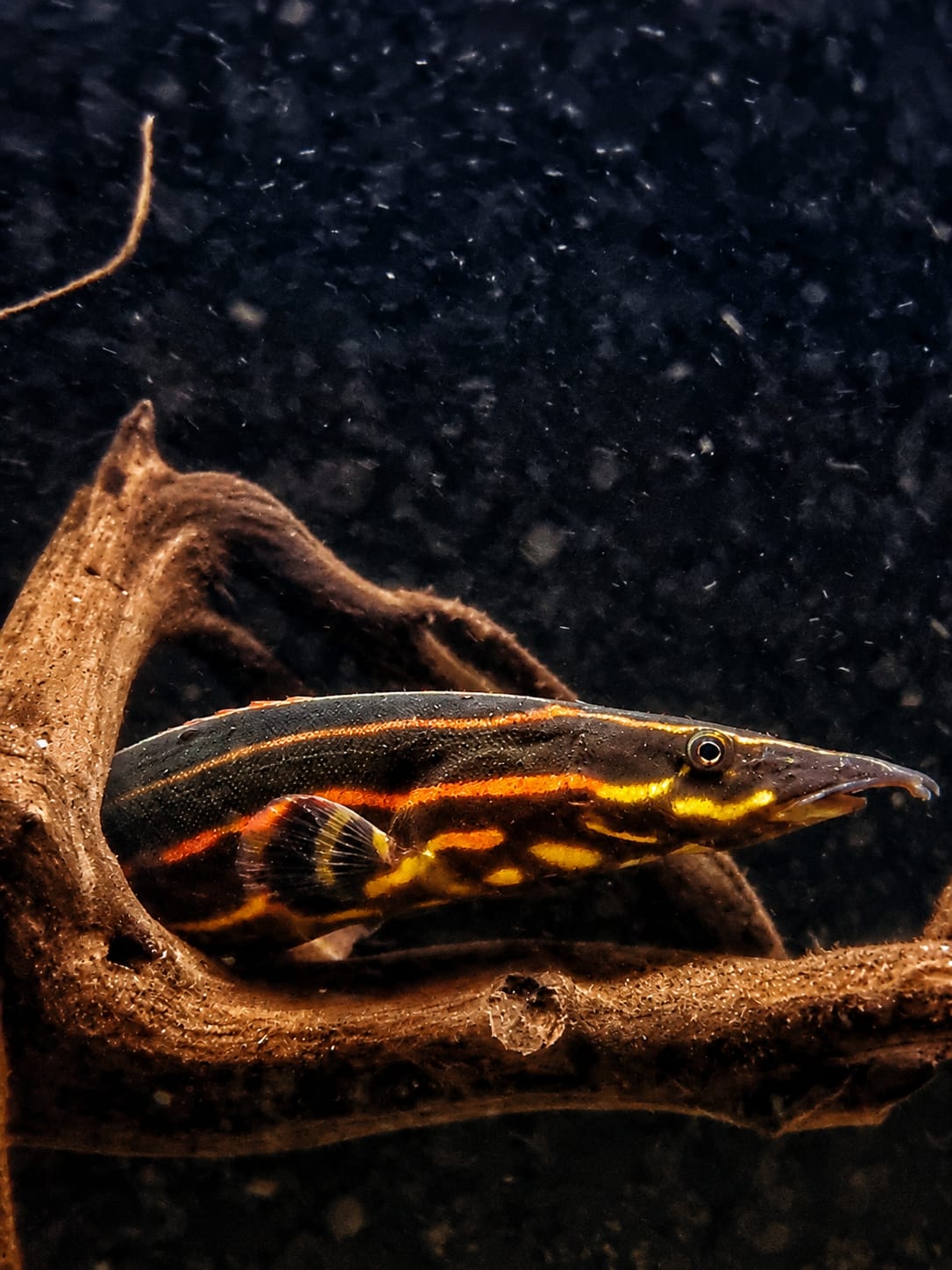
Fire Eel (Mastacembelus erythrotaenia)
The Fire Eel is one of the most striking and charismatic freshwater fish available, admired for its long, snake-like body, vivid red and orange markings, and inquisitive personality. Despite its intimidating appearance, this magnificent spiny eel is generally peaceful towards larger tank mates and quickly becomes a favourite among aquarists thanks to its intelligence and interactive nature.
Native to the rivers, floodplains, and swamps of Southeast Asia, the Fire Eel inhabits slow-moving waters with soft substrates, dense vegetation, and submerged roots. In the wild, they spend much of their time buried beneath the sand with only their head exposed, waiting to ambush passing prey.
Fire Eels are renowned for recognising their keeper and, with patience, many individuals can even be hand-fed. Their curious behaviour, graceful swimming, and impressive adult size make them an unforgettable centrepiece for large freshwater aquariums.
🌿 Why Choose Fire Eels?
🔥 Stunning red and orange markings along the body
🐍 Elegant snake-like appearance with graceful movements
🧠 Intelligent and often recognises its keeper
🤝 Can become tame and accept food from your hand
🌿 Excellent centrepiece for large tropical aquariums
✨ Fascinating burrowing and hunting behaviours
💪 Hardy when kept in stable, well-maintained aquariums
🏆 One of the most iconic spiny eels in the aquarium hobby
📏 Care Requirements
🧬 Scientific Name: Mastacembelus erythrotaenia
📛 Common Name: Fire Eel
🏠 Tank Size: Minimum 450L+ for an adult
📏 Adult Size: Up to 90–100cm
🌡️ Temperature: 24–28°C
⚗️ pH Range: 6.5–7.8
💧 Water Hardness: Soft to moderately hard water (5–15 dGH)
🧘 Temperament: Peaceful towards similarly sized fish; predatory towards smaller species
🍽️ Diet: Earthworms, prawns, mussels, bloodworm, lancefish, frozen foods, and high-quality carnivore pellets
👥 Group Size: Best kept singly unless housed in an exceptionally large aquarium
🏡 Aquarium Setup
Fire Eels require spacious aquariums with plenty of hiding places and a soft substrate that allows them to burrow naturally.
An ideal setup should include:
🏖️ Fine sand substrate
🪵 Large pieces of driftwood
🪨 Smooth rocks and caves
🌿 Hardy plants attached to wood or rocks
🌊 Open swimming space
💧 Excellent filtration with gentle to moderate water movement
A fine sand substrate is essential. Fire Eels frequently bury themselves, and coarse gravel can damage their delicate skin.
These fish are exceptional escape artists and can squeeze through surprisingly small gaps. A tightly fitting lid with all openings securely covered is essential.
Stable water conditions and regular maintenance are key to keeping Fire Eels healthy, as they can be sensitive to deteriorating water quality.
🐠 Compatibility
Fire Eels are generally peaceful with fish too large to be viewed as prey.
Suitable tank mates include:
✅ Large peaceful cichlids
✅ Silver Dollars
✅ Larger gouramis
✅ Bala Sharks
✅ Large rainbowfish
✅ Plecos and other sizeable catfish
Avoid keeping them with:
❌ Small tetras and rasboras
❌ Guppies and other small livebearers
❌ Freshwater shrimp
❌ Aggressive fin-nipping fish
❌ Highly territorial bottom-dwelling species
Any fish small enough to fit into a Fire Eel's mouth may eventually become food.
🍽️ Feeding & Behaviour
Fire Eels are carnivorous predators that feed primarily during the evening and at night.
A varied diet should include:
🪱 Earthworms
🦐 Prawns and shrimp
🩸 Bloodworm
🐚 Mussels
🐟 Frozen lancefish and white fish
🟤 High-quality sinking carnivore pellets
Many newly imported Fire Eels can be shy and may initially refuse prepared foods. With patience, most individuals adapt well and will readily accept frozen foods and quality pellets.
Fire Eels are intelligent and inquisitive fish that often become very interactive, swimming to the front of the aquarium when their keeper approaches.
⚠️ Important Notes
Fire Eels possess small defensive spines located in front of their dorsal fin. While not dangerous, these spines can become caught in nets, so using a container rather than a net is recommended when moving the fish.
Their skin lacks the protective scales found on many fish, making them more sensitive to certain medications. Always use treatments intended for scaleless fish or follow dosage recommendations carefully.
Because of their eventual size, Fire Eels require a large aquarium from an early age, and owners should plan for their long-term housing before purchasing one.
With excellent care, Fire Eels can live for 15 years or more, becoming highly personable pets that develop strong feeding responses and fascinating individual personalities.